Facelift
Facelift Surgery in Mumbai
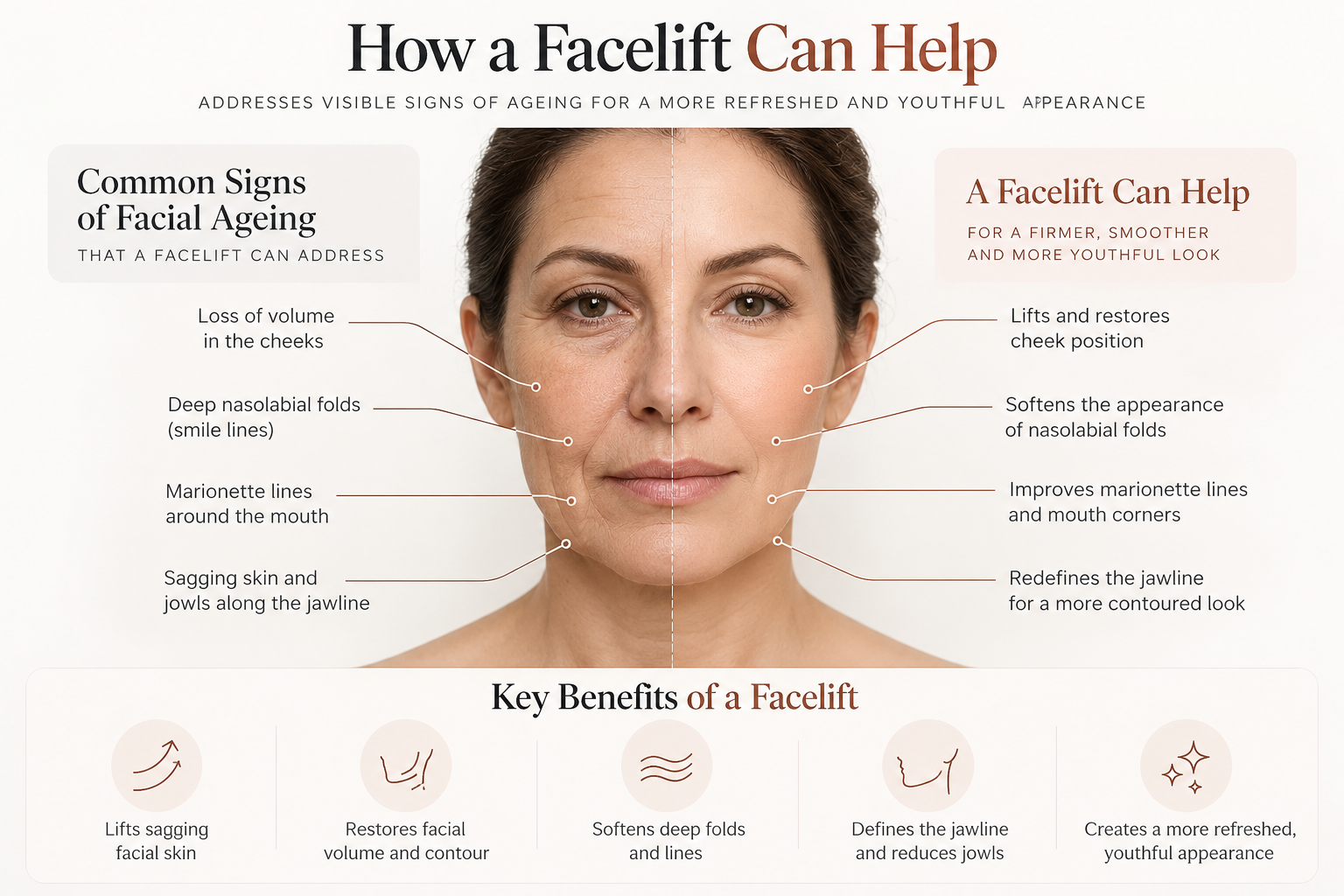
Facial ageing can gradually affect skin firmness, facial volume, jawline definition and the position of the tissues around the cheeks and lower face. Sagging skin, jowls, folds around the mouth and changes in facial volume can make the face appear older or more tired.
Facelift surgery, also known as rhytidectomy, is a facial rejuvenation procedure designed to address age-related sagging and improve the overall contour of the face.
Depending on the patient's concerns, facial rejuvenation may involve a facelift alone or may be combined with procedures such as fat grafting, eyelid surgery or other aesthetic treatments.
Dr. Saumil Shah, Plastic, Aesthetic & Reconstructive Surgeon in Mumbai, provides personalized facial rejuvenation planning based on facial anatomy, skin laxity, facial volume and the patient's aesthetic goals.
Book a consultation with Dr. Saumil Shah to understand whether facelift surgery or another facial rejuvenation approach is appropriate for you.
Facelift Surgery at a Glance
| Parameter | Details |
|---|---|
| Procedure | Facelift / Rhytidectomy |
| Treatment Options | Mini Facelift, Full/Classical Facelift, Facelift with Neck Lift |
| Treatment Areas | Face, cheeks, jawline and lower face; neck may be included when combined with neck lift |
| Primary Concerns Addressed | Sagging skin, jowls, facial laxity and age-related changes in facial contour |
| Recovery | The first 7–10 days may involve swelling, fullness and pulling sensations |
| Pain / Discomfort | Tightness, fullness and pulling sensations may occur during early recovery and can be managed with prescribed medication |
| Results | Facial contour and skin laxity improve as postoperative swelling settles |
| Indicative Cost | ₹1,25,000–₹2,90,000 for a Mini Facelift, depending on the treatment plan |
The appropriate technique, extent of correction, recovery and final cost depend on the patient's facial anatomy, degree of skin laxity and treatment plan.
What Is Facelift Surgery?
A facelift is a surgical facial rejuvenation procedure designed to address sagging and age-related changes in the face. It aims to create a more refreshed appearance while maintaining natural-looking facial contours.
The procedure may help improve:
Sagging facial skin
Jowls
Lower-face laxity
Certain facial folds
Loss of definition around the jawline
Changes in facial tissue position associated with ageing
The goal of facelift surgery is not simply to pull the skin tighter. Facial rejuvenation requires consideration of the underlying tissues, skin quality, facial volume and overall facial proportions.
In selected patients, facial fat grafting or other aesthetic treatments may be incorporated into the overall rejuvenation plan. The appropriate approach depends on the individual's facial anatomy, concerns and treatment goals.
Why Do Patients Consider Facelift Surgery?
Ageing affects different areas of the face at different rates.
Patients may consider facelift surgery when they notice:
Sagging skin around the lower face
Jowls along the jawline
Deepening folds around the mouth
Loss of facial definition
Sagging facial tissues
An older or tired appearance
Changes that are no longer adequately addressed by non-surgical treatments
A facelift is not intended to stop the natural ageing process. Rather, it is designed to address existing signs of facial ageing and improve facial contour.
Who Is a Candidate for Facelift Surgery?
Suitability for a facelift depends on the individual's facial anatomy, degree of skin laxity, facial volume and aesthetic goals.
A consultation may be appropriate for patients who have:
Noticeable facial skin laxity
Jowls or lower-face sagging
Age-related changes in facial contour
Facial folds associated with tissue descent
Realistic expectations about surgical rejuvenation
Overall health suitable for elective surgery
Age alone does not determine whether someone is a candidate.
The current practice information notes that facelifts are commonly considered by patients in the 35–55+ age range, while younger patients may have other non-surgical options available.
Types of Facelift Surgery
The appropriate facelift technique depends on the location and degree of facial ageing and the amount of correction required.
Mini Facelift
A mini facelift uses smaller, less conspicuous incisions and is generally intended for selected patients with more limited facial laxity.
It can be used to address areas such as:
Early jowling
Mild to moderate lower-face sagging
Loss of jawline definition
The exact surgical approach depends on the patient's facial anatomy and treatment goals.
Full / Classical Facelift
A full or classical facelift is designed for more significant facial ageing and skin laxity.
It may address broader areas of the face, including sagging skin and lower-face changes.
The technique is selected according to the patient's degree of ageing and desired level of correction.
Facelift with Neck Lift
When ageing changes extend from the lower face into the neck, a facelift may be combined with a neck lift.
This can allow the lower face and neck to be treated as part of a more comprehensive facial rejuvenation plan.
Facelift vs Non-Surgical Facial Rejuvenation
Not every patient who wants facial rejuvenation needs a surgical facelift.
Non-surgical approaches may be considered when there is limited skin laxity or when a patient wants a less invasive treatment.
Depending on the individual case, options may include:
Hyaluronic acid fillers
Fat injections
Thread lifts
Botulinum toxin
Radiofrequency-based treatments
HIFU
Other skin-rejuvenation treatments
Non-surgical treatments generally cannot provide the same degree of correction as surgery when there is significant skin and tissue laxity.
The appropriate treatment depends on the patient's anatomy, concerns and desired outcome.
Consultation & Personalized Facial Rejuvenation Planning
Facelift surgery should be customized to the individual rather than performed using the same technique for every patient.
During consultation, the assessment may include:
Degree of facial skin laxity
Presence of jowls
Jawline definition
Facial folds
Facial volume loss
Skin quality
Cheek position
Neck appearance
Previous facial procedures
Desired degree of rejuvenation
The consultation also helps determine whether a mini facelift, full facelift, facelift with neck lift, or non-surgical treatment may be more appropriate.
How Is Facelift Surgery Performed?
The exact surgical technique depends on the type of facelift selected and the patient's anatomy. In general, the procedure involves several stages.
Facial Assessment and Surgical Planning
The face is evaluated to identify areas of skin laxity, tissue descent, jowling and volume changes.
Incision Planning
Incisions are planned in locations that allow access to the facial tissues while considering scar visibility and the patient's anatomy.
Tissue Repositioning
The facial tissues are repositioned according to the surgical plan to improve facial contour and address sagging.
Excess Skin Management
Where appropriate, excess skin is addressed as part of the facelift procedure.
Facial Contouring
The lower face, cheeks and jawline are refined according to the patient's individual treatment plan.
Additional Rejuvenation
When appropriate, procedures such as facial fat grafting or other aesthetic treatments may be incorporated to address volume loss or skin quality.
Closure and Postoperative Care
The incisions are closed carefully and postoperative instructions are provided to support healing.
Facelift Scars & Scar Placement
Scarring is an expected consideration with facelift surgery because the procedure requires surgical incisions.
The exact location and length of the scars depend on the facelift technique and individual anatomy.
Facelift incisions are generally planned around areas such as the hairline and natural contours around the ear so that scars can be as discreet as possible.
Scar appearance changes as healing progresses. Individual scar formation varies depending on skin characteristics, healing response, incision placement and postoperative care.
During consultation, Dr. Saumil Shah can explain the expected incision locations and scar considerations for the recommended facelift technique.
Recovery After Facelift Surgery
Recovery after facelift surgery is gradual. The current practice information describes the first 7–10 days as a period in which patients may experience fullness, pulling sensations and swelling.
First Few Days
Swelling, bruising, tightness and facial fullness can occur after surgery. These symptoms generally improve as the initial healing process progresses.
First 7–10 Days
The current practice information states that feelings of fullness and pulling are common during the first 7–10 days. Pain medication may be used to manage discomfort, and cold packs may help reduce swelling when recommended by the surgical team.
Following Weeks
As swelling gradually decreases, the facial contour becomes more apparent. Patients should follow postoperative instructions regarding wound care, activity and follow-up.
Longer-Term Healing
Facial tissues continue to settle as healing progresses. The appearance of scars also continues to mature over time. The final result should therefore be assessed after sufficient healing rather than immediately after surgery.
Facelift Results
The goal of facelift surgery is to improve facial contour and address age-related tissue laxity.
Potential improvements may include:
Reduced appearance of jowls
Improved jawline definition
Smoother facial contour
Reduction in sagging skin
More refreshed facial appearance
Improved balance between different areas of the face
A facelift does not stop future ageing. Natural changes in skin elasticity and facial tissues continue over time.
Maintaining a healthy lifestyle and following appropriate skincare and postoperative recommendations can help support the result.
Facelift and Facial Fat Grafting
Ageing does not only involve skin sagging. Some patients also experience loss of facial volume.
Facial fat grafting may therefore be considered as part of a broader facial rejuvenation plan.
Fat can be used to restore selected areas of facial volume where appropriate.
The current practice information describes facial fat injection as one of the modalities that may be incorporated into facial rejuvenation.
Whether fat grafting is appropriate depends on the patient's facial anatomy and volume requirements.
Can a Facelift Treat Nasolabial and Marionette Lines?
A facelift can improve some facial folds associated with sagging and tissue descent, particularly when these changes are related to lower-face ageing.
However, not every wrinkle or facial line is caused by tissue descent.
Depending on the cause, additional treatments such as fillers, fat grafting, skin treatments or other procedures may be considered.
A consultation is therefore important to determine the cause of individual facial lines before selecting treatment.
Risks & Considerations
As with any surgical procedure, facelift surgery has potential risks and complications. These may include:
Swelling and bruising
Bleeding or hematoma
Infection
Changes in sensation
Temporary or persistent numbness
Visible or widened scars
Facial asymmetry
Hairline or hair-bearing skin changes
Skin-healing problems
Contour irregularities
Need for revision surgery in selected cases
The likelihood of complications varies between patients and depends on factors such as surgical technique, individual health, healing response and postoperative care.
These risks, along with the potential benefits and alternatives, should be discussed with your plastic surgeon before surgery.
Why Choose Dr. Saumil Shah for Facelift Surgery in Mumbai?
Facial rejuvenation requires more than simply tightening the skin. The surgeon needs to consider facial proportions, tissue laxity, volume, jawline definition and the relationship between different facial features.
Plastic Surgery Expertise
Dr. Saumil Shah is a Plastic, Aesthetic & Reconstructive Surgeon in Mumbai. His qualifications and training include:
MBBS – KEM Hospital, Mumbai
MS in General Surgery – M.S. University
MCh in Plastic Surgery – Sion Hospital (LTMMC), Mumbai
Personalized Facial Rejuvenation
Every patient's face ages differently. The recommended facelift technique is therefore based on the degree and location of tissue laxity, facial proportions and individual treatment goals.
Focus on Natural-Looking Results
The goal is to improve facial contour and rejuvenate the appearance while maintaining the patient's individual facial characteristics.
Comprehensive Facial Planning
Depending on the patient's needs, facial rejuvenation may involve a facelift alone or may incorporate procedures such as facial fat grafting, eyelid surgery or neck lift.
Patient Safety & Surgical Care
The existing practice information highlights:
Nerve blocks to help manage postoperative discomfort
DVT pumps to help reduce the risk of blood clots
Warmers to help maintain body temperature
Appropriate surgical and postoperative monitoring
Follow-up care during recovery
Procedures are performed in a NABH-accredited hospital, according to the current practice information.
Transparent Treatment Guidance
Patients can discuss the recommended facelift technique, expected results, recovery, risks and costs before deciding to proceed.
Facelift Before & After
Before-and-after photographs can help patients understand the type of facial contour improvement that may be possible after facelift surgery.
Individual results vary according to:
Degree of facial ageing
Skin elasticity
Facial anatomy
Amount of tissue laxity
Treatment technique
Healing response
Before-and-after photographs should therefore be viewed as examples rather than guarantees of a specific result.
Facelift Surgery Videos
Facelift Guide
Dr. Saumil Shah explains how facelift surgery can address facial ageing and improve facial contour.
Non-Surgical Facial Lift
Learn about non-surgical approaches such as fillers and thread lifts and how they differ from surgical facial rejuvenation.
Facial Rejuvenation Education
Additional educational videos can help patients understand the available facial rejuvenation approaches and what may be appropriate for different stages of facial ageing.
Facelift Surgery Cost in Mumbai
The cost of facelift surgery depends on the type of facelift, degree of facial ageing, surgical complexity and whether additional procedures are performed. The current pricing information provides the following indicative ranges:
| Procedure | Indicative Cost (INR) | International Reference (USD) |
|---|---|---|
| Mini Facelift | ₹1,25,000 – ₹2,90,000 | $1,500 – $2,500 |
| Full / Classical Facelift | ₹1,50,000 – ₹2,40,000 | $1,800 – $2,800 |
| Facelift + Neck Lift | ₹1,58,000 – ₹2,60,000 | $1,900 – $3,100 |
| Facial Fat Grafting | ₹82,000 – ₹1,50,000 | $990 – $1,800 |
These figures are indicative and not a fixed quotation. The final cost may vary depending on the recommended procedure, surgical complexity, hospital and operating theatre requirements, anaesthesia, and whether additional facial procedures are performed.
Transparent Pricing
Patients can discuss the expected treatment cost during consultation based on their individual surgical plan.
The treatment estimate may take into account:
Surgeon's professional fee
Hospital charges
Operating theatre charges
Anaesthesia
Surgical requirements
Additional procedures
Postoperative care
Follow-up consultations
International patients should confirm the current quotation and any separate travel, accommodation or medical-tourism expenses before making arrangements.
Take the Next Step
If sagging skin, jowls or age-related facial changes are affecting how you feel about your appearance, a consultation can help determine which facial rejuvenation approach is appropriate.
Dr. Saumil Shah can assess your facial anatomy, degree of skin laxity, facial volume and treatment goals and discuss whether a mini facelift, full facelift, facelift with neck lift, fat grafting or a non-surgical option may be suitable.
During your consultation, you can discuss:
Recommended facelift technique
Expected facial changes
Scar placement
Recovery and postoperative care
Potential risks
Whether additional procedures may be appropriate
Treatment cost
Related Facial Rejuvenation Procedures
Depending on your individual concerns, you may also explore:
Each procedure addresses different aspects of facial ageing and should be selected according to individual anatomy and treatment goals.
Our other Cosmetic Surgery Services in Mumbai:
Gynecomastia Surgery in Mumbai | Tummy Tuck Surgery in Mumbai | Liposuction Surgery in Mumbai | Breast Augmentation Surgery In Mumbai | Breast Reduction Surgery in Mumbai | Rhinoplasty in Mumbai | Brazilian Butt Lift Surgery in Mumbai | Botox Treatment in Mumbai | Derma Filler Treatment in Mumbai | Thread Lift Surgery in Mumbai | Eye Brow Lift Surgery in Mumbai | Lip Augmentation Surgery in Mumbai | Neck Lift Surgery in MumbaiDr. Saumil Shah, a Board-Certified Plastic Surgeon in Mumbai, specializes in Rhinoplasty, Facelift, Breast Surgery, Tummy Tuck, and Liposuction, known for delivering consistent, excellent results.
© Dr. Saumil Shah | All Rights Reserved